
A Slow Goodbye
On standing in change without collapsing. On how grief and action do not exclude each other. On beginning to live differently – not perfectly, not consistently, but truthfully.

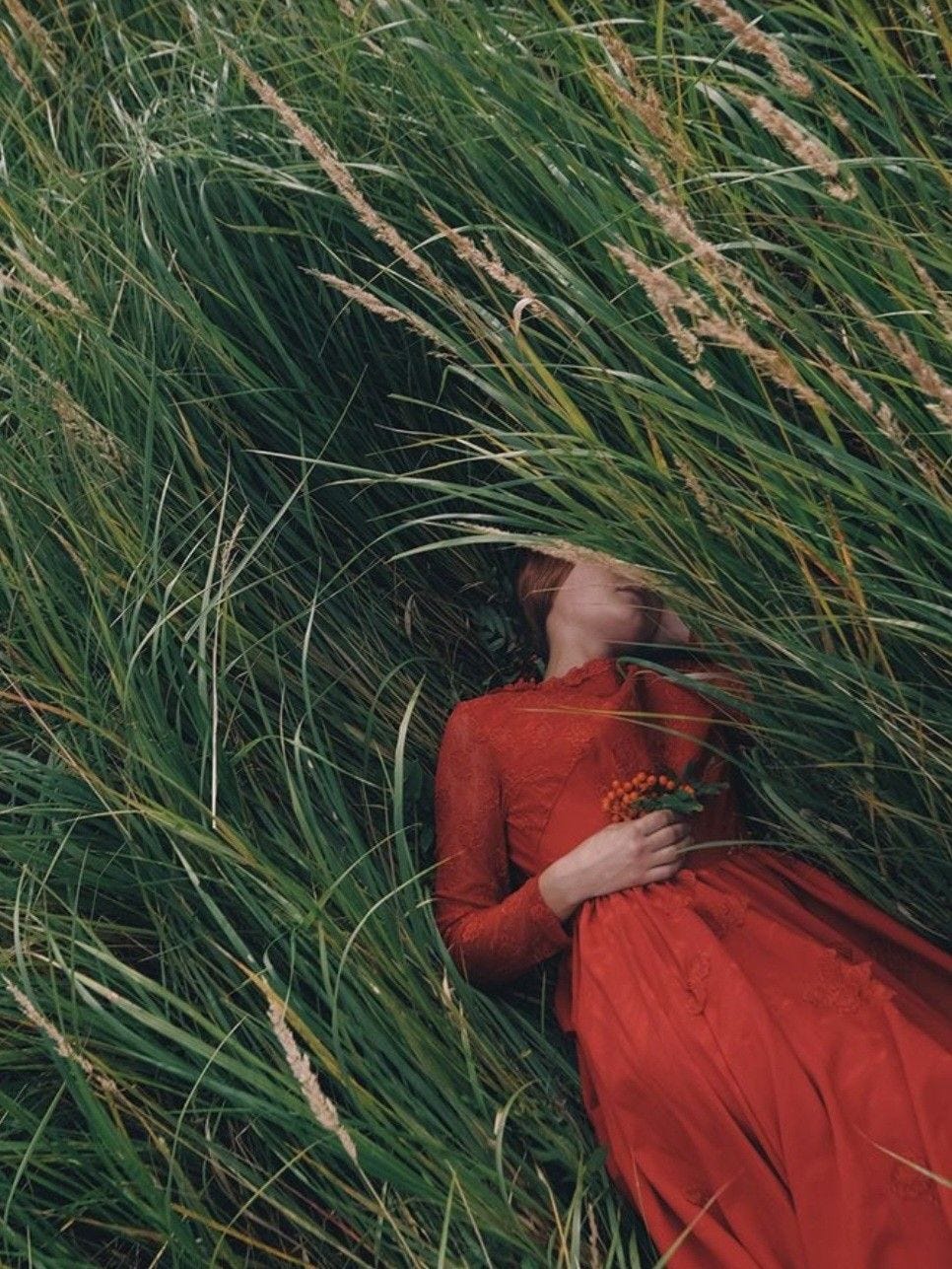
It hits me during a morning walk. I’m saying goodbye. Not to life itself, but to the life I once knew. It’s slowly slipping away, and the farewell sits heavy in my chest, melancholic but with a strange kind of strength. The feeling is like when someone you love dies. A brutal presence, where priorities suddenly fall into place, together with a new kind of uncertainty and the finality of something that can’t be negotiated with.
When someone dies, everything stops for a while. You sit there, bewildered, staring out the window at a road where cars keep driving somewhere. How can they, when everything has stopped?
That’s what it feels like. Something in the world is slipping away from me. Slowly, like a memory fading from the body. I hear it in the wind that now has a different key, in the scents that come too early, in the birds breathing heavier in the heat. It’s as if the world I grew up in has started speaking a new language that I’m trying to understand the meaning of.
Apparently whales are singing in different frequencies now. The tones have changed, lower, softer. Maybe that’s what I’m doing too. My own voice is searching for another tone, one that no longer wants to drown out but to listen more.
What slips away
This is where I walk in the mornings. In a world where the edges of the shore still feel familiar, where I know their ebb and flow and how the seaweed rises after storms. Where I’ve learned the birds’ movements and watched the shades shift with the seasons. This is where mornings once carried a quiet sense of safety, not this ticking uncertainty.
When I hear how the sea is eating away the beaches at Haväng and the world begins to lose its contours, I feel myself letting go too, giving up the fight to hold on and defend what once was. I’ve shouted, written, tried to persuade. I’ve searched for the right tone, the right angle, the right numbers. But it no longer seems to matter.
Instead I’m saying goodbye to the idea that one day I’ll take my son across the world, back to my favorite beach, my favorite city, to that place with the baked garlic only I seemed to know about. The world is changing in ways that make returning difficult—not only geographically, but existentially. Conscience won’t allow it. It’s not the same place anymore, and I’m not the same person.
It hurts to think about it. The times the sun burned too hard, the paperbacks under the parasol, horizons that carried promise. Silent meals in mutual understanding, the energy that slowly returned. But reality breaks in. Birds begin to fall from the sky when the heat grows too strong. I saw a photo in a newspaper, a shoreline where dead birds lay as a dark line against the pale sand. It felt as if the world was slowly being switched off.
I’m saying goodbye to New York—the city I never grew tired of and that I may never see again. The wind that struck my face as I turned a corner in autumn, the smells, the smoke, the lights that never went out. I still see the images in my feed, from those who still live there, but it feels like another dimension now. It’s not sad anymore. Just distant. Like a life I may have left, or that may have left me.
I’m also quietly saying goodbye to the shapes here at home, the ones I might soon miss. To the still whisper of trees that still stand. Stillness. To the exact warmth of sunlit rock. To the red leaves that color autumns in a special way, a steady reference I don’t know if my grandchildren will ever see or share.
All of this used to be background, a backdrop that simply existed. Now it has stepped forward and I take it in differently. And I know I have to begin to say farewell. I don’t want to, but I can see that it’s already slipping away. I don’t know how long my own shoreline will remain.
What I’ll bring with me
I’ve started to redefine what safety means. Compulsively, I think about what I would need if the worst were to happen. If I had to flee. I make lists in my head and rearrange them. What really matters most, apart from being with the people I love? And maybe water.
A roof over my head. (That must be the most important, right?)
Warmth. (Or is that even more important than a roof?)
A pillow. (I wouldn’t be able to sleep otherwise.)
A blanket (for warmth and to hide under, or to mark some kind of boundary)
Medicine. (though mine aren’t vital. What happens to those who don’t have access to theirs when they have life-threatening deseases?)
Maybe a way to communicate. A phone?
?
And then comes the rest, the harder part. If I can, what do I take from my life, my home? What matters most? The books? A painting? Or the chest. The chest great-aunt Olga carried across the Atlantic, full of hopes for a better life. It’s empty now, but it holds everything: the memories of my grandmother’s family, their dreams, their struggle, their perseverance. Can I tell this story without it, or do I need one thing to hold it all? My grandmother fled and didn’t see her home again for fifty years. What is lost in such a flight? Things, memories, or identity? Maybe all three. At once. Hard to pack into a suitcase.
What is safety when everything becomes uncertain? Is it a place? A feeling? A memory? A face, or a familiar embrace? If I have my family with me, if we have a roof over our heads and a blanket to wrap around us, maybe that’s enough.
And then my thoughts turn to those who are actually fleeing. To the children who have lost the ones they used to hold, who have no roof, no food, no blanket. What does it mean to say goodbye to “my world” when others never even had the chance to have one?
Powerlessness. Hopelessness.
No, the world is no longer mine.
What I’m leaving behind
The existential is one thing, the practical another. That I can grasp. If words can no longer make a difference, then bodies must. In my body, I feel new kinds of resistance. And I listen.
Slowly I’m saying goodbye to meetings that lead nowhere, jobs that exist only to keep a system running that I no longer believe in. To tasks without meaning. Goodbye to rush hour on the buses and the smell of bodies pressed together without connection. To the restlessness I once thought was ambition, but now wonder if it was a kind of escape.
I’m saying goodbye to the idea of revenge. That life will always give us new and better chances.
Farewell to the constant feeling that I should be better—more driven, stronger, more disciplined. To the cult of optimization that turned the body into a project rather than a home.
I’m saying goodbye to the feeling of always needing to hurry. To days broken into calendar slots and efficient windows. To the illusion that my worth lies in how much I manage to do. How little that says about how present I am.
I’m saying goodbye to the idea that independence means not needing anyone, to the belief that being alone is strong. To lives lived in parallel corridors—without contact, without meeting eyes.
I’m saying goodbye to things I never really wanted. To stress, to competition, to the endless comparing of lives and the illusion of control.
I’m saying goodbye to the belief that I can plan away uncertainty, that I can figure life out like an equation. To the disappointment when the future doesn’t follow my plans, and to the relief in understanding that it was never meant to.
The in-between
It’s a strange feeling to find yourself in the middle of a farewell while the world around you continues as if nothing has happened. As if everything were still stable. As if we hadn’t already crossed the threshold into another time.
I see people booking trips, planning their futures, saving for retirement—all the things that once felt natural, but now sound hollow to me. Like a ritual we’ve forgotten but still perform, as if it still worked.
How can they not see?
That’s probably what hurts the most. Not ignorance, but the unwillingness to stay with reality as it is, when it starts to chafe.
I’ve sat in so many rooms where everyone pretends nothing is happening, where the conversation shifts the moment it becomes uncomfortable. I’ve seen the eyes that turn away. It wasn’t nature I lost first—it was trust. Trust in our ability to stand together.
In the middle of all this, half of me still lives in the old. Because that’s how we are. We become through the eyes of others, through their words. I still belong, still want to belong, at least sometimes.
I live in the in-between now. Half of me is still there, in the old life of beaches, meetings with strict agendas, and rhythms my body instinctively learned to follow.
The other half is already here, where the world is changing and I need to prepare. It feels like saying goodbye to myself.
At the same time, I reach toward the one I haven’t yet fully met—the one who can live without a map, but with a compass in her chest.
The woman I used to be
I realize I’ve already said goodbye to things, without always knowing when it happened. To tastes I no longer choose. To comforts I once took for granted—the speed, the access, the freedom. But also to a version of myself.
The one who lived by the logic I was raised in. The one who was always pushing, always building, always on her way somewhere. Who measured her worth in motion, results, achievement. A self that followed a rhythm that wasn’t her own, that never asked if something felt true, only if it could be done.
I thought she was me. And maybe she was. A survival version of myself. An emergency exit. With a kind of loyalty to a system that never really saw me, but that I still wanted to prove myself to.
But slowly, she too is dissolving.
Who might I have been under other circumstances, and who do I need to become now? What do I need to learn to master? These are questions without clear answers yet, but my body answers the moment I ask.
Goodbye to ideals that were never going to make me happy. To circles that don’t allow what matters most. To relationships that only mirror someone I no longer recognize.
Another rhythm
I can feel another rhythm trying to take shape. A rhythm of breathing, rather than achieving. Of receiving, rather than controlling. I don’t yet know who I’m becoming in it, but I sense it’s someone who sees the world in completely new ways.
I live more now, in the middle of that uncertainty.
The breeze against my skin reminds me. I’m here. I’m alive. And I never want to step out of that feeling.
I’m discovering that stillness isn’t emptiness. That being here, in this place, isn’t less than being somewhere else. It’s more. Here is what’s alive, what’s near, what’s real. Here is what still holds.
What holds
We hold on to each other, carry our stories and memories, while learning to let go. We pack what matters most, in our hands and in our hearts, and hope it will be enough.
There’s something beautiful in how we move like one great body, searching for who we are now, how we belong.
There’s beauty in saying goodbye, in letting go. Memories are both comfort and burden. They hold moments that are no longer possible, but they also remind us of what was once real. That life carried us, that the world existed, that beauty truly did. It wasn’t a dream. It was real, when it was.
It’s no longer possible to save the world as we know it, only to slowly learn to live in it as it is. To say goodbye to what no longer holds.
To the world that was.
To the one I thought I was.
But not to life.
Not to love.
Not to what might still become.
Photo by Olga Barantseva.
For more writing from the edge where an old world fades and a flickering new one begins – visit WEAVE or subscribe. And yes, please consider being a paying subscriber.
This piece made me tear up in a clinic waiting room. Thank you for naming the irredeemable sense of grief watching what we love be lost to us - which is the most natural thing in life and yet... We are exacerbating it as a species to a degree that induces so much planetary suffering, it is unbearable. Thank you for writing so beautifully and with such a keen eye to the world of the outside and of your own emotions. I hope to one day be able to put into words what I feel about losing the grip of what is, too.
Wow, I needed this, thank you! Beautifully written, certainly it all rings true for me. As deeply disturbing as losing nature is—ecocide being the ultimate tragedy—it doesn’t help to deny it. As someone who has been covering the green/climate beat for nearly 3 decades (self-initiated/funded) and having felt so much urgency to educate and engage the wider public, I am now in the in-between stage. In between caring (maybe too much), shouting from the rooftops that the sky IS falling—with most falling on deaf ears—and devoting all free time, money, energy to this mission, the current deny-o-saurs in power are so cruel and clueless that in one fell swoop they’ve undone so much hard fought progress, all that is making me question my commitment to this “cause.” Having become a grandmother 2 years ago, and just turned 70, I am wondering what the best use of my time and resources might be. For now I am interviewing Solutionaries on YouTube. They cheer me up, though we do vent, but it still feels like we’re losing the battle for 💚’s and minds. There is almost no support for independent journalists turned activists, at least not enough to grow as big and loud as we need with corporate media MIA on the extent of our ecological poly-crises, so stuck between the proverbial rock and hard place.