
Everything Is Connected
Introduction and Chapter 1 from the book "Navigating a New Economy"

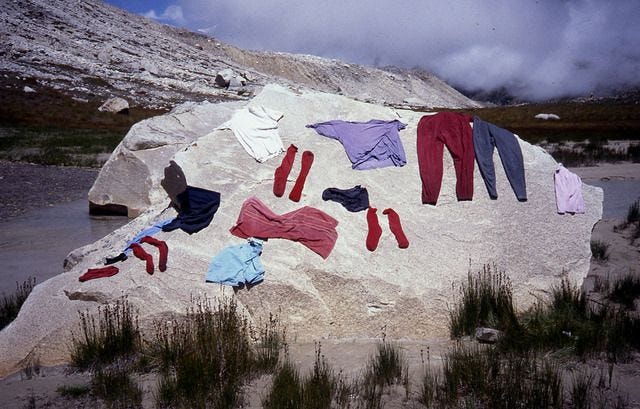
SUBSTACK, you gave me the courage! Because of this generous, thoughtful space I’ve published a small e-book on platforms everywhere about things that truly matter to me. Being here has shown me that what’s important to me is often important to you too.
In the book, I try to make sense of how our small, everyday choices can shape a new kind of economy – one based on how we choose to see and treat each other. Maybe things aren’t as complicated as they sometimes seem?
It’s called Navigate a New Economy – 10 Principles for Building Value, Resilience and Direction. And as a thank you, I’m sharing the 10 chapters here with you.
Here’s the first one.
INTRODUCTION
You don’t need another plan. You need a new orientation.
If you're holding this text in your hands, you’ve probably already started to sense it: It’s not enough to understand transition, or to talk about systems change. It's not enough to assume someone else will carry it out. It has to be felt. It has to begin in you—in your relationships, in your everyday decisions.
Maybe it starts in that uneasy moment when you’re sitting in yet another meeting about sustainability goals, and something inside you whispers: “Wait—are we really changing anything?” Or when you look back on your strategy-day notes and the words feel hollow—like they belong to a language that isn’t yours.
Maybe you notice it in the cracks between numbers and meaning. In the fatigue of circular conversations. In how young people no longer accept the old rules. In how nature has begun to answer back. Things are moving fast now. The world is searching for new directions—with or without us. The question is no longer if you’ll contribute. It’s how.
And maybe—if you take a closer look—you realize something else: That we’ve come to accept a kind of double life. That in professional settings, we often act in ways we never would in our personal lives. We hide our intentions in the fine print. We
manipulate to sell. We disguise misinformation as marketing. We deny responsibility for the harm we cause—not directly, not relationally. We push each other to the brink and call it success. And all of this has become normal. But it does something to us.
This little book is an invitation. Not to a new framework. But to a new direction. It’s written for those who feel that something is off in how we speak about business, the future, change, growth, and value. For those who want to make a difference—but don’t know whether they need to quit their jobs and start over, or simply begin where they already are.
This is not a manual full of answers. It’s a companion. A practical guide for those who want to reorient in the midst of everyday life. My hope is that while reading, you’ll feel a little less alone in your longing, a little more confident in your own compass, and maybe more grounded in what you’ve always known—but didn’t always have words for.
This is not a book about “doing it right.” It’s a book to help you see more. See new patterns between yourself and the world you operate in. And perhaps most importantly: See that you are not alone.
1. EVERYTHING IS CONNECTED
Systems thinking as a business compass.
We’ve grown up in a culture that teaches us to separate and categorize. To break things apart, define them, and put them in isolated boxes. Economy over here. Environment over there. Culture, health, leadership, psychology—each in its own corner.
But the world doesn’t work that way. And neither do you.
The paradox is this: the more we try to control by separating things, the more chaos we create. When we shield the economy from the “disruption” of environmental concerns, we end up creating bigger economic crises. When we isolate health from the workplace, both suffer. The things we try to protect by keeping them apart often collapse because of that separation.
Every decision you make is tangled in a web of dependencies— relationships, consequences, resources, assumptions, and stories. Change something in one place, and it ripples out elsewhere. Push one part of a system too hard, and it breaks—affecting other systems too. If you can’t see that whole picture, you risk making decisions that seem logical in the short term but are destructive over time.
This is where systems thinking comes in. Not as an abstract theory, but as a new kind of business compass. A way of seeing patterns instead of checklists. Connections instead of silos. When you begin to think systemically, the way you lead—yourself and others—starts to shift.
In practice, systems thinking means no longer seeing your business as an isolated machine but as a living part of a wider network. It means understanding that every choice—about procurement, communication, relationships, or goals—has ripple effects you may not immediately see. Systems thinking makes you more attentive, more future-oriented, and more relevant in a time when old models are failing.
You start asking different questions:
What impact does this decision have in places I can’t immediately see?
What could amplify or weaken this decision over time?
What synergies are possible if others make similar choices?
What needs nurturing in this situation—and what do I need to
let go of?
You begin seeing new kinds of solutions:
Not just what sells, but what builds resilience and long-term stability
Not just what works for you now, but what strengthens the whole
Not just how to “optimize,” but how to leave things better than you found them
Even though everything is interconnected—and the world’s complexity can feel overwhelming—the path forward is often very simple. We’re constantly making choices. Small, everyday, practical ones. What we talk about. What we pay attention to. How we treat others. These choices are like portals—gateways to another world, embedded in daily life.
If we’re used to thinking in technical, linear, instrumental ways— using the old economic logic, communicating through reports or PR plans—we may need to start looking in different directions. To become more human. More honest.
Systems thinking begins in relationship. In pausing where you wouldn’t normally pause. In how you listen. In who you gravitate toward. In where you place your attention, which stories you let in, and how they shape your worldview.
Change no longer begins with a new strategy. It begins with orienting ourselves toward different relationships, different contexts, different kinds of knowledge. Only then can we make decisions that serve not just the systems we’re used to—but the futures we actually want to live in.
Our ability to make wise, systemic decisions is not only limited by how we think—it’s also shaped by what we’re legally allowed or expected to do. Behind many of our actions are contracts, laws, or procurement models. Systems thinking also means becoming aware of these structures—and sometimes choosing to challenge them. That’s when you begin to realize that resistance isn’t always a problem. Sometimes, it’s a signal that something is shifting. You also begin to see that there’s no such thing as a “neutral” stance. Every decision you make—as a business owner, employee, leader, investor, colleague—has consequences. It strengthens something that already exists. It builds something new. It contributes to a system. The question is: Which one?
Example
When Nora took over her small family-run food company, she felt overwhelmed, thinking her main job was to deliver products on time. But during her first year, she began to see patterns: every delay was connected to something—weather conditions, transport issues, relationships with farmers, illnesses in employees’ families. “I thought I was running a company,” she said. “But it turns out I was stewarding something else—a kind of landscape full of interdependencies.” That insight changed how she made decisions. Instead of optimizing for efficiency, she began asking: What holds this ecosystem together? What makes it more resilient? What helps it thrive? That’s when her leadership started to shift.
Reflection: Your ecosystem
Write down three important decisions you’ve recently made in your work. For each one, consider:
Who or what was affected—directly and indirectly?
What did this decision reinforce?
What questions could you have asked to see more of the bigger picture?
Photographer unknown.
If you want your own copy of the e-book, it's available in almost every online bookstore for example:
For more writing from the edge where an old world fades and a flickering new one begins – visit WEAVE or subscribe to the newsletter.