
The last function of being human
Why intuition might be what saves us and why we need to stop waiting for proof and start trusting what our collective body already knows

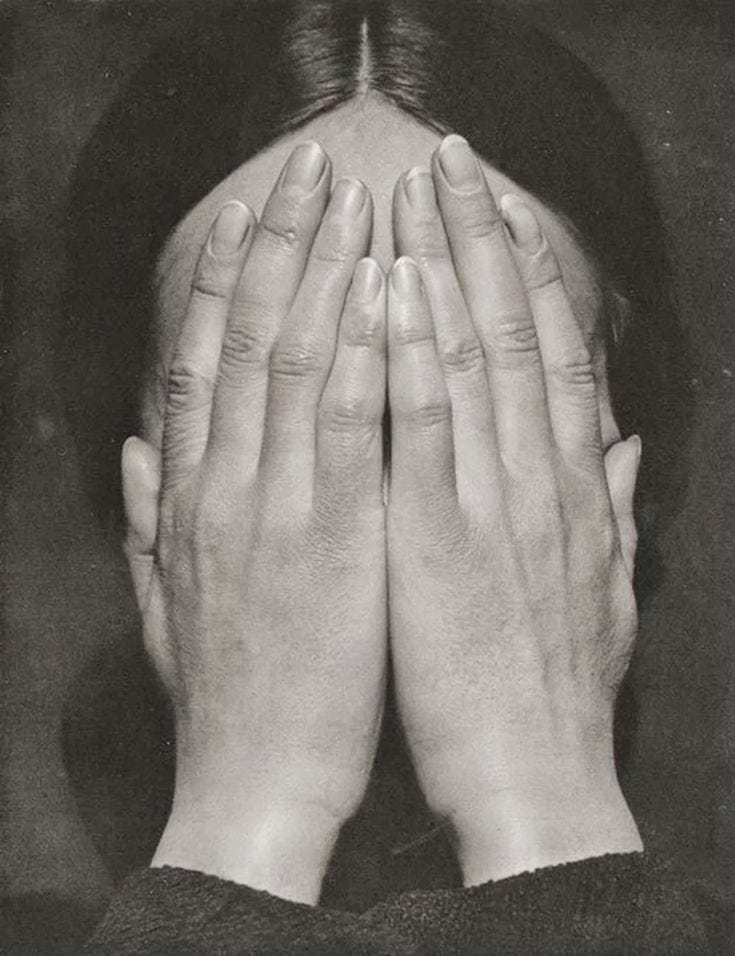
There are different kinds of knowledge. There is the kind that can be understood, observed, sorted, and easily communicated. The kind we grasp rationally – perhaps not always something we care about or agree with – but it exists there, between us. It works through us.
And then there is this other kind of knowledge. The kind that is intimately tied to who you are and what you have lived. The knowledge we simply carry, what we know but cannot always explain.
I imagine intuition itself as a neutral field that is simply there, strong for some and weaker for others. With a voice that tells you something about everything you experience, a voice you can choose to listen to or ignore. It observes and tries to pass information to your conscious mind, usually quietly and muttering, but sometimes very loudly. And once you let it in, it is persistent.
It can want to hold you back – make you cautious, pull you inward – and it can want to push you forward, toward possibility. It can connect you to a wide range of emotions.
The problem arises when we believe we have to choose. As if there were a scale with intuition on one side and reason on the other, and one of them must weigh more. And almost always we choose the rational – not because it is more true, but because it is more defensible.
We have learned not to trust intuition until we can explain it. To doubt it until it is confirmed by numbers, studies, or consensus. We have learned that intuition is something that must be examined, taken apart, and understood before it is allowed to be true. But this very demand – to understand before we listen – is an expression of the worldview that is currently collapsing around us.
Here I want to explore why we need to shift the center of gravity and first listen to what is inherited, human, and bodily – and then act, and only after that, hopefully, understand.
Why we stopped listening
It was not always like this. In the world where humans were formed, intuition was not something mystical. It was survival. The ability to sense when something was wrong. To know, without words, that a situation was dangerous, that a person was not trustworthy, that the weather was about to change. Being able to read early signals – in the body, in the group, in the landscape – was what kept us alive.
But as the world became modern, the conditions changed. Knowledge became something that had to be proven, not just felt. Rational thinking became the standard, the measure of what was real. And everything that could not be accounted for in words, numbers, or logical steps was viewed with suspicion.
In almost every context, intuition ended up on the wrong side of this new boundary. It was labeled “gut feeling,” “hunch,” “female intuition” – always with an implicit distrust. Something that might turn out to be right sometimes, in hindsight, but that could not really be relied on.
And so we trained it away. Not completely, but enough for it to lose its legitimacy. Enough for us to stop listening when the body contradicted the mind. Enough for us to teach our children to “think it through” instead of “feel it through.”
The rational did not become a complement to the intuitive. It became a replacement.
But the body has already understood
But we need to rethink this. Not see intuition as something other than knowledge, but as knowledge in an early form. Tor Nørretranders has described how human beings take in millions of bits of information in any given moment, while only a fraction of it can be held in consciousness. When I am talking to you, at best I can remember what I intend to say, keep a thread, and stay attentive to your reaction, to how what I am saying is received. Maybe I am a bit self-conscious, or notice an itch somewhere, but that is roughly what I register. The body, on the other hand, picks up subtle reactions, temperatures, what happens in the periphery, how people move around us, and much, much more. All of this is processed continuously in the body, in the nervous system, in the unconscious. What we call intuition or gut feeling is often precisely this: knowledge the body holds that has not passed through consciousness, but exists nonetheless, even though it has not yet found language.
Daniel Kahneman called this System 1 – the fast, automatic, pattern-recognizing mode of thinking that operates alongside the slow, analytical System 2. Not as a lesser form of intelligence, but as a different one.
Malcolm Gladwell showed in the book Blink how experts often make accurate decisions in seconds, without being able to explain how. They just know – far below the surface of consciousness.
The paradox is that all of this is usually presented in rational terms – as proof that we should understand intuition. As arguments that it is, in fact, rational, just in a different way. As a way of legitimizing it by showing that it can be translated into the language the system recognizes.
But what if it is precisely this – our constant attempt to “explain” intuition – that makes us unable to hear it?
The cost of waiting
We have all experienced it. The times when we sensed something but did not listen. The relationship we entered even though something resisted. The decision that felt wrong, but where theory and numbers pointed in the right direction. The conversation where we felt something was missing, but said nothing because it could not be proven.
In hindsight, it becomes obvious. “I knew it,” we say. “I felt it all along.” But why did we not listen then? Because we could not explain it. Because it seemed like no one else saw it. Because the system – the organization, the norm, the logic – said something else.
And so, slowly, we drifted into a state where we are now paying the price. Not only personally, but collectively. Polycrisis, the collapse of multiple systems. Again and again, history shows the same pattern: someone sensed it. Someone saw it. Someone warned of it. But they lacked the kind of proof the system recognized, and so they were ignored. Until it was too late.
Collectively, where we are right now, we have of course long since moved beyond intuition on one level – through research and constant evidence, we know where we stand. But individually, we remain stuck. Most of us are still caught in the web of systems, acting according to what is required of us rather than expressing what we feel where it would actually matter.
The change that is needed cannot be articulated in a new plan or strategy. We do not need more reports. What we need is to begin expressing what feels wrong – and to find ways for what we intuitively sense to meet the intuition of others. Only then can we, collectively, begin to move in new ways.
So the problem is not a lack of intuition. It is the lack of willingness to listen to it before it can be proven.
The collective body
What we call intuition carries layers. Biological. Cultural. Collective. Some of what we feel is older than ourselves. A kind of inherited wisdom, shaped by generations of survival. These are patterns etched into the human body over thousands of years of distinguishing threat from safety, friend from foe, what endures from what does not.
When many people sense the same thing at the same time – an unease, an attraction, a warning – it is not coincidence. It is the system’s sensors responding to something that has not yet appeared in the statistics.
But to sense this, we need to be connected. To ourselves. To one another. To something larger than us. This is precisely what modern rationality has severed. We have learned to trust systems over people. Data over lived experience. Proof over what is felt.
Yet the systems themselves rest on assumptions that no longer hold. They emerged in a different world. Slower. Simpler. More stable. In a time of rapid change, complex interdependencies, and systemic threats, collective intuition is often more accurate than established frameworks. Because it reacts earlier. It reads patterns that are not yet measurable. It senses shifts that have not yet become visible.
Daring to listen before we understand
I am not suggesting that we abandon analysis. That we become uncritical or follow every impulse without reflection. What I want is to reverse the order – not least in my own life.
First listen, then act, then understand.
Trust the body when it pushes back. Stay with something that feels wrong even when it looks right, or when a concern refuses to loosen its grip. And pay attention when many of us are sensing the same thing at the same time – because there is often something real there.
When that happens, I take a deeper breath. I make space to articulate what I am carrying that has not yet found words. The attempts I have made so far suggest that our collective body knows far more than statistics or media reveal. Over the past year, I have been in meetings where I have experienced something I can only describe as magic. Where communication has been something other than verbal. Where together we have grasped something new – perhaps a state, perhaps a direction.
From there, it becomes easier to engage with rational considerations as well. The most radical act right now may be precisely this – to dare to trust what we already know. To let it out. To allow it to guide us into whatever comes next.
This is becoming a book - and I need you to make it real. If this resonates, please consider pre-ordering The Starting Point. Your support doesn’t just fund a book - it signals that this perspective matters.
For more writing from the edge where an old world fades and a flickering new one begins – visit WEAVE or subscribe. And for practicing all of this together with me - join the 100 days process.
Reclaiming intuition
I
A Reversed World
The little body so complete in feeling and intuition
Knows how to act in every situation
The body has its own language, so close at hand
Wouldn’t know how to act if that communication were banned
Then you grow up and hear all about logic and lot
The way through life that you ought to be taught
A society that practices a different course
For you an incomprehensible path in comparison with the original source
Il
We Seek the Answer
That course, based on logic and fact
As if that were something to attract
Want you to provide me with solutions clear
So I can return to the simplicity I once held dear
I shall not fall into such a trap
Allow myself to forget what’s blessed in that gap
There is no manual for how I should live
The reverse would be what’s skewed and fugitive
The aid lies in feeling a sensation
In that way, create with deliberation
Strokes that become a painting’s revelation
Canvas and fabric, layers, the foundation for creation
The certainty that it will then be given to me
My unique path through life, set free
I am taking this No-fee masterclass on developing INTUITION by : SONIA CHOQUETTE
https://0puxn.mjt.lu/lnk/AVgAAIn5O2UAAAAbdYIAALCZSDoAAAABEWsAADX5ABwxyQBpZTH3XqDYJQb7SLauZlkBMWcbtQAa-g8/3/zspfiSsIuidhhPTMMhJz8Q/aHR0cHM6Ly9naWZ0ZWQuc29uaWFjaG9xdWV0dGUubmV0L2NlcnQtd2ViaW5hci1yZWc_dXRtX3NvdXJjZT1lbWFpbA